BioCARe Statistics: Funding and Women Scientists Supported by Year and State
· 1 min read · 3 official sources
The Department of Biotechnology used Rs 5.00 crore on BioCARe in 2024-25 and Rs 12.57 crore in 2023-24, according to a Rajya Sabha reply of March 2025. Delhi, Maharashtra and Tamil Nadu had the most supported women scientists. Year-wise funding since 2020-21 and state-wise beneficiary counts are below.
Biotechnology Career Advancement And Re-orientation (BioCARe) Programme For Women Scientists: key numbers
Infographic
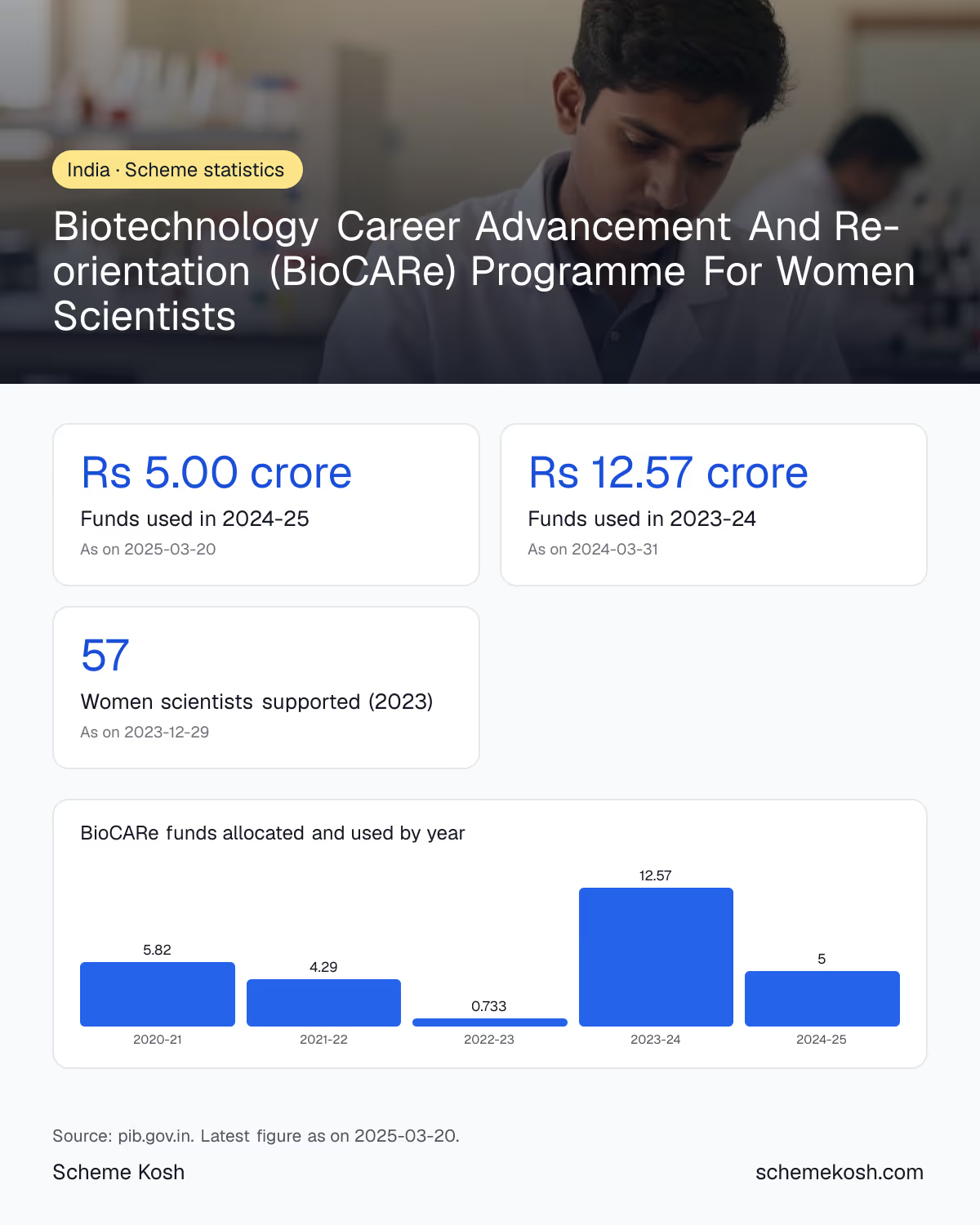
BioCARe funds allocated and used by year
Funds allocated or utilised under DBT BioCARe in each financial year, as given in a Rajya Sabha written reply on 20 March 2025.
| Year | Funds (Rs crore) |
|---|---|
| 2020-21 | 5.82 |
| 2021-22 | 4.29 |
| 2022-23 | 0.7329 |
| 2023-24 | 12.57 |
| 2024-25 | 5.00 |
Source: pib.gov.in, as on 20 March 2025
Top states by BioCARe beneficiaries (2024-25)
Women scientists supported under BioCARe by state, for states with at least two beneficiaries in 2024-25, with the 2023-24 count for comparison.
| State/UT | Beneficiaries 2024-25 | Beneficiaries 2023-24 |
|---|---|---|
| Delhi | 10 | 12 |
| Maharashtra | 8 | 6 |
| Tamil Nadu | 6 | 7 |
| Uttar Pradesh | 6 | 6 |
| Karnataka | 5 | 5 |
| Punjab | 5 | 6 |
| Telangana | 4 | 4 |
| Kerala | 3 | 3 |
| West Bengal | 3 | 4 |
| Madhya Pradesh | 2 | 2 |
Source: pib.gov.in, as on 20 March 2025
How a BioCARe grant is awarded
What the numbers show
BioCARe is a small scheme. It gives women scientists, especially those without a regular job or returning after a break, their first research grant as principal investigator. A Rajya Sabha written reply of 20 March 2025 put the funds at Rs 5.00 crore for 2024-25 and Rs 12.57 crore for 2023-24. The Department of Biotechnology's year-end review for 2023 said 57 women scientists were supported that year.
The trend over the years
Funding has moved up and down rather than growing steadily. It was Rs 5.82 crore in 2020-21 and Rs 4.29 crore in 2021-22, dropped to Rs 0.7329 crore in 2022-23, then jumped to Rs 12.57 crore in 2023-24. The state table in the same reply lists 2022-23 beneficiaries only in Delhi (2), Karnataka (1) and Maharashtra (1), which matches the dip. The reply does not explain why that year was so low.
State differences
Beneficiaries are concentrated where large research institutes are. Delhi had 10 BioCARe scientists in 2024-25 and 12 in 2023-24, the highest each year. Maharashtra, Tamil Nadu, Uttar Pradesh, Karnataka and Punjab follow. Several states, including Gujarat, Rajasthan and Odisha, had no beneficiaries in either 2023-24 or 2024-25. In the North East, Manipur and Mizoram had one or two each.
What the figures do not tell you
The reply gives funds "allocated/utilized" in one column, so it is not clear whether each year's figure is the budget or actual spending. The beneficiary table counts women scientists by the state of the host institute, not where they come from. No national total of applicants or success rate has been published.
Where to check the numbers
DBT announces each BioCARe call on its website, and answers to Parliament questions on women in science, published through PIB and sansad.in, are the main source of year-wise and state-wise numbers.
Frequently asked questions
How much money does the government spend on BioCARe?
DBT figures given in Rajya Sabha show Rs 5.00 crore for 2024-25 and Rs 12.57 crore for 2023-24. Spending was much lower in 2022-23, at Rs 0.7329 crore.
How many women scientists does BioCARe support each year?
DBT's year-end review said 57 women scientists were supported under BioCARe in 2023. State-wise counts for 2020-21 to 2024-25 were given in a Rajya Sabha reply of March 2025.
Which state has the most BioCARe women scientists?
Delhi had the most, with 10 beneficiaries in 2024-25 and 12 in 2023-24, followed by Maharashtra with 8 in 2024-25.
Why was 2022-23 so low?
The Rajya Sabha reply shows only Rs 0.7329 crore used and very few beneficiaries in 2022-23. The reply does not give a reason.
When did BioCARe start?
The Department of Biotechnology started BioCARe in 2011 to help women scientists, including those returning after a career break, get their first research grant.
Eligibility, documents and how to apply: Biotechnology Career Advancement And Re-orientation (BioCARe) Programme For Women Scientists full guide
Charts, data files and the infographic are free to download, share and embed with a link back to this page.
Sources
This guide was checked against these official pages:
- pib.gov.in (www.pib.gov.in/PressReleasePage.aspx?PRID=2113278)
- pib.gov.in (www.pib.gov.in/PressReleasePage.aspx?PRID=1991615)
- pib.gov.in (www.pib.gov.in/PressReleasePage.aspx?PRID=1703389)