NSIGSE Statistics: Girls Covered and Funds Before the Scheme Ended
· 1 min read · 2 official sources
The National Scheme of Incentive to Girls for Secondary Education covered 9,73,330 girls in 2017-18, its last full year, and has since been discontinued, the Ministry of Education told the Rajya Sabha in 2022. Across 2017-18 to 2021-22, Rs 465.52 crore was used for 15,50,273 girls. Year-wise figures are below.
National Scheme of Incentive to Girls for Secondary Education (NSIGSE): key numbers
Infographic
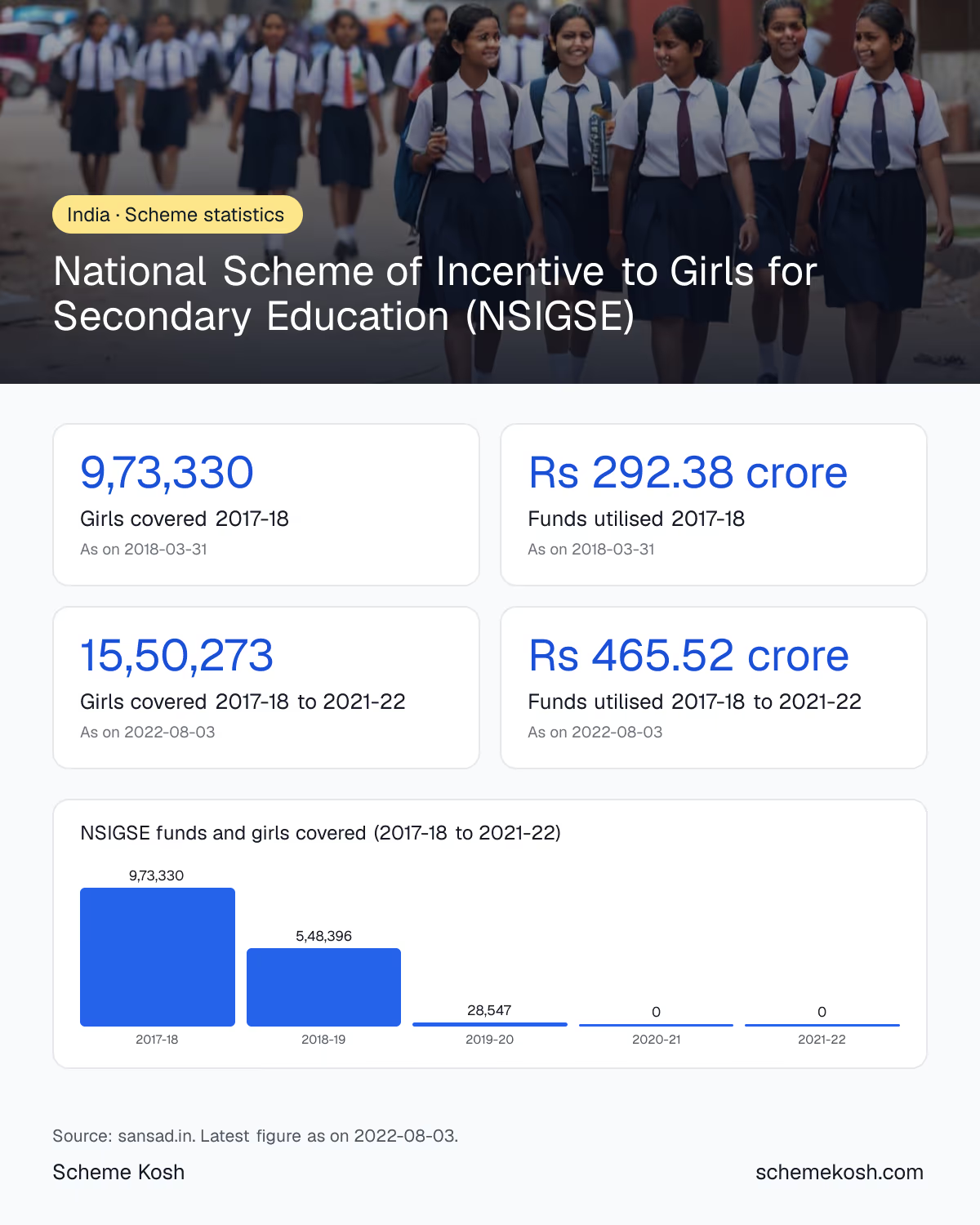
NSIGSE funds and girls covered (2017-18 to 2021-22)
Budget allocation, number of girls and funds utilised each year, from a Rajya Sabha reply of 3 August 2022. The 2018-19 amount was sanctioned only for backlog proposals and the 2019-20 amount for a court case. Nothing was allocated after that.
| Year | Girls covered | Allocated, BE (Rs crore) | Utilised (Rs crore) |
|---|---|---|---|
| 2017-18 | 9,73,330 | 320.00 | 292.38 |
| 2018-19 | 5,48,396 | 255.90 | 164.58 |
| 2019-20 | 28,547 | 100.00 | 8.56 |
| 2020-21 | 0 | 0 | 0 |
| 2021-22 | 0 | 0 | 0 |
Source: sansad.in, as on 3 August 2022
How NSIGSE worked while it ran
What the numbers show
NSIGSE gave a Rs 3,000 fixed deposit to SC/ST girls and Kasturba Gandhi Balika Vidyalaya pass-outs who joined Class IX, payable with interest at 18 after Class X. A Rajya Sabha reply by the Ministry of Education on 3 August 2022 shows 9,73,330 girls were covered in 2017-18, with Rs 292.38 crore utilised. That was the last normal year of the scheme.
The trend over the years
The scheme was discontinued with effect from 2018-19. Money spent in 2018-19 (Rs 164.58 crore for 5,48,396 girls) cleared only backlog proposals. In 2019-20, Rs 8.56 crore was sanctioned for 28,547 girls because of a court case. No funds were allocated in 2020-21 or 2021-22. Over the five years covered by the reply, Rs 465.52 crore was used for 15,50,273 girls, against Rs 675.90 crore allocated in budget estimates.
Why the scheme ended
The Ministry said the scheme had inherent problems in design and implementation. The Institute of Economic Growth evaluated it in 2020-21 and found that beneficiaries mostly preferred similar schemes run by states, so there was limited reason to revive it. Girls' education is now supported through Samagra Shiksha, which funds the upgrade of KGBVs to Class 12, self-defence training, transport and stipends for girls with special needs.
What the figures do not tell you
The reply gives national totals only, not state-wise numbers. It counts girls for whom deposits were sanctioned, not how many later withdrew the money after turning 18 and passing Class X. Girls who received a deposit before 2018-19 may still be waiting to claim it, and the data does not show unclaimed deposits.
Where to check
Families with an old NSIGSE deposit should ask the school or the State education department that sanctioned it. Ministry of Education replies in Parliament, on sansad.in, are the official record of the scheme's figures.
Frequently asked questions
Is NSIGSE still running?
No. The Ministry of Education told the Rajya Sabha on 3 August 2022 that NSIGSE was discontinued with effect from 2018-19 because of problems in its design and implementation. Support for girls now comes through Samagra Shiksha.
How many girls did NSIGSE cover?
9,73,330 girls were covered in 2017-18 and 5,48,396 in 2018-19. Across 2017-18 to 2021-22, the total was 15,50,273 girls.
How much money was spent under NSIGSE?
Rs 292.38 crore was utilised in 2017-18, Rs 164.58 crore in 2018-19 for backlog cases and Rs 8.56 crore in 2019-20 for a court case. The five-year total was Rs 465.52 crore.
Why was NSIGSE stopped?
The Ministry cited inherent issues in design and implementation. An evaluation by the Institute of Economic Growth in 2020-21 found beneficiaries preferred similar state schemes, so there was limited scope to revive it.
Eligibility, documents and how to apply: National Scheme of Incentive to Girls for Secondary Education (NSIGSE) full guide
Charts, data files and the infographic are free to download, share and embed with a link back to this page.
Sources
This guide was checked against these official pages:
- sansad.in (sansad.in/getFile/annex/257/AU1960.pdf?source=pqars)
- pib.gov.in (www.pib.gov.in/PressReleaseIframePage.aspx?PRID=1562599)